
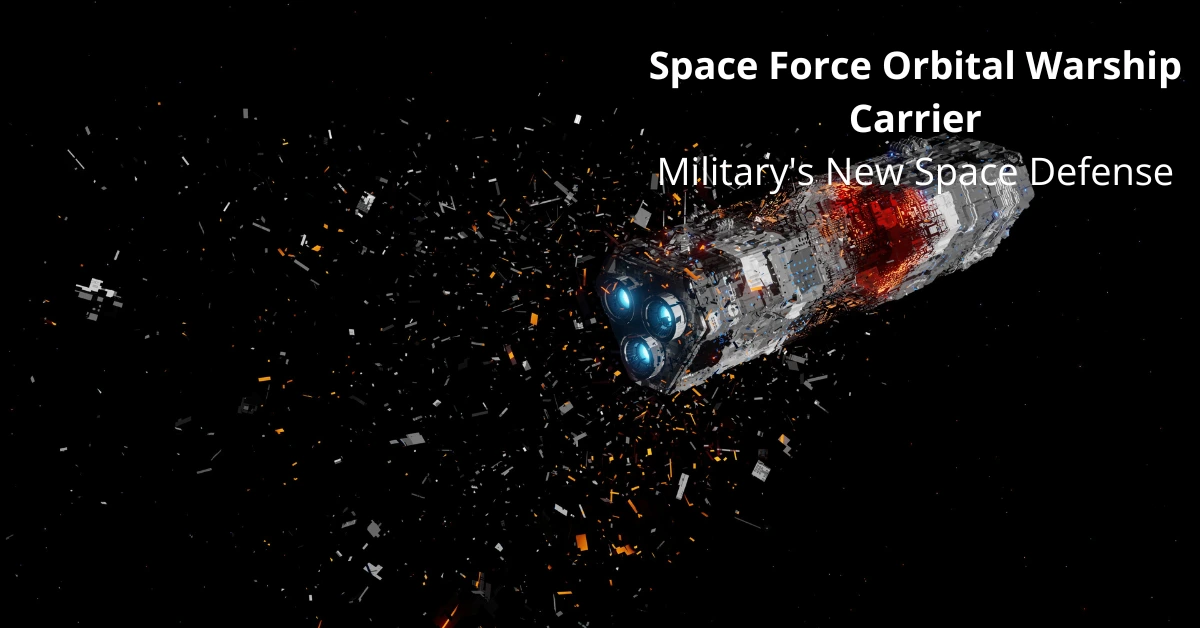
Space Force Orbital Warship Carrier: Military’s New Space Defense
Understanding the Space Force Orbital Warship Carrier Concept
The US Space Force orbital warship carrier represents a paradigm shift in military space operations, combining traditional naval warfare concepts with cutting-edge orbital technology. This revolutionary platform serves as a mobile command center and deployment hub positioned in Earth’s orbit, designed to support, protect, and deploy smaller spacecraft and satellites.
Unlike traditional aircraft carriers that operate on ocean surfaces, these orbital platforms function in the vacuum of space, utilizing advanced propulsion systems and life support technologies. The concept draws inspiration from naval carrier operations while addressing the unique challenges of space-based military operations.
Core Operational Principles
The orbital warship carrier operates on three fundamental principles: strategic positioning, rapid deployment capability, and sustained operations in space. These platforms maintain geosynchronous or highly elliptical orbits, allowing them to cover specific regions of Earth while serving as staging areas for smaller military spacecraft.
Technology Integration
Advanced artificial intelligence systems manage complex orbital mechanics, while modular design allows for mission-specific configurations. The carrier incorporates debris shielding, radiation protection, and redundant life support systems essential for long-duration space operations.
Strategic Advantages
Orbital positioning provides unparalleled surveillance capabilities and rapid response times to space-based threats. The carrier can deploy defensive satellites, conduct reconnaissance missions, and maintain communication networks across vast distances.
Operational Flexibility
These platforms adapt to changing mission requirements through modular spacecraft bays and reconfigurable mission modules. Crews can service, repair, and redeploy satellites without returning to Earth-based facilities.
Development Timeline and Current Status
The Space Force nears completion of first orbital warship carrier prototypes through partnerships with aerospace contractors and research institutions. Current development focuses on proving key technologies while addressing the enormous logistical challenges of orbital construction and maintenance.
Initial concept studies began in 2019, with formal development contracts awarded in 2021. The program has progressed through several design phases, incorporating lessons learned from the International Space Station and commercial space platforms.
Prototype Development
Ground-based testing facilities simulate orbital conditions while validating critical systems. These tests include docking mechanisms, automated spacecraft handling, and long-duration life support systems essential for sustained operations.
Key Milestones
The first orbital demonstration mission is scheduled for the mid-2020s, featuring a scaled-down version of core systems. This mission will validate automated docking procedures, spacecraft deployment mechanisms, and orbital maneuvering capabilities.
Funding and Resources
Congressional appropriations have allocated billions for the orbital carrier program, with additional funding from classified military space budgets. The investment reflects the strategic importance of maintaining space superiority in an era of increasing international competition.
International Partnerships
Allied nations contribute specialized technologies and expertise, particularly in areas like advanced materials, propulsion systems, and space-based manufacturing techniques.
Technical Specifications and Capabilities
The orbital aircraft carrier incorporates revolutionary technologies that enable sustained space operations far beyond current capabilities. These platforms measure several hundred meters in length, comparable to traditional naval carriers, but operate in the three-dimensional environment of space.
| Specification | Capability | Operational Range |
|---|---|---|
| Length | 300-400 meters | Modular expansion possible |
| Spacecraft Capacity | 50-100 small satellites | Various mission profiles |
| Crew Size | 20-50 personnel | Rotational assignments |
| Power Generation | Nuclear/Solar hybrid | Multi-megawatt output |
| Operational Altitude | 500-35,000 km | Adjustable orbital parameters |
Propulsion Systems
Advanced ion drives and chemical thrusters provide precise orbital maneuvering capabilities. The hybrid propulsion approach balances fuel efficiency with rapid response requirements, enabling the carrier to adjust its position as strategic needs evolve.
Communication Networks
High-bandwidth communication systems maintain constant contact with ground-based command centers and deployed spacecraft. Quantum communication technologies provide secure, interference-resistant channels for sensitive military communications.
Manufacturing Capabilities
Onboard 3D printing and assembly facilities enable rapid production of replacement parts and mission-specific equipment. This capability reduces dependence on Earth-based supply chains and enables extended autonomous operations.
Strategic Military Applications
Space defense operations benefit enormously from orbital platforms that can respond rapidly to emerging threats and maintain persistent coverage of critical regions. The orbital warship carrier serves multiple roles in protecting national space assets and maintaining strategic superiority.
Satellite protection represents a primary mission, with the carrier deploying defensive systems around high-value space assets. These operations include debris removal, threat assessment, and active defense against hostile spacecraft or weapons systems.
Reconnaissance Operations
Advanced sensor arrays provide unprecedented intelligence-gathering capabilities, monitoring activities across Earth’s surface and in space. The platform’s mobility allows for detailed observation of specific regions during crisis situations.
Communication Hub Functions
The carrier serves as a critical node in military communication networks, relaying signals between ground forces, naval units, and other space-based assets. Redundant systems ensure continued operations even under attack.
Rapid Deployment Missions
Emergency satellite deployment capabilities allow for quick replacement of damaged infrastructure or deployment of specialized sensors during conflicts. The platform can launch multiple spacecraft simultaneously to address urgent operational needs.
Space Traffic Management
Orbital carriers help manage the increasingly congested space environment, tracking debris, monitoring foreign spacecraft, and enforcing space traffic regulations in their operational zones.
Comparison with Traditional Military Platforms
The orbital aircraft carrier concept draws inspiration from naval operations while adapting to the unique environment of space warfare. Unlike ocean-based carriers that rely on air power projection, space carriers focus on satellite deployment and orbital defense.
Traditional carriers operate in two dimensions across Earth’s surface, while orbital platforms must consider three-dimensional movement and the complex gravitational influences of multiple celestial bodies.
Operational Similarities
Both platforms serve as mobile command centers with the ability to deploy and recover smaller craft. The hierarchical command structure and multi-mission flexibility translate well from naval to space operations.
Environmental Differences
Space operations eliminate weather concerns but introduce radiation exposure, micrometeorite impacts, and the vacuum environment. These factors require completely different life support, shielding, and maintenance approaches.
Logistical Challenges
Supply chain management becomes exponentially more complex in space, with limited launch windows and extreme costs for delivering materials from Earth. Orbital carriers must achieve much higher levels of self-sufficiency.
Crew Considerations
Extended space deployment affects crew physical and mental health differently than naval operations. Rotation schedules, exercise requirements, and medical support need complete redesign for the space environment.
Challenges and Technical Limitations
Developing functional orbital warship carriers faces significant engineering challenges that push the boundaries of current technology. These obstacles range from basic physics constraints to complex logistical problems that have no Earth-based equivalents.
Launch costs remain prohibitively expensive for large-scale deployment, with each kilogram of material requiring thousands of dollars to reach orbit. This economic reality forces designers to minimize mass while maximizing functionality.
Orbital Mechanics Complexity
Maintaining stable orbits while accommodating docking operations and spacecraft launches requires sophisticated control systems. The platform must constantly adjust for gravitational perturbations, atmospheric drag, and the momentum changes from deploying spacecraft.
Life Support Systems
Sustaining human life in space for extended periods demands reliable air recycling, water purification, and waste management systems. Any failure could prove catastrophic for the entire crew, requiring multiple redundant systems.
Maintenance and Repair
Conducting maintenance in spacesuits while wearing bulky protective equipment severely limits repair capabilities. Many operations that seem simple on Earth become extremely challenging in the space environment.
Communication Delays
Depending on orbital position, communication with Earth-based command centers may experience significant delays or complete blackouts. The platform must operate autonomously during these periods.
International Space Law and Policy Implications
The deployment of military orbital platforms raises complex questions about space law, territorial claims, and international cooperation in space. Existing treaties governing space activities were written before such capabilities existed, creating legal ambiguities.
The Outer Space Treaty of 1967 prohibits placing weapons of mass destruction in orbit but allows for defensive systems and conventional military equipment. Orbital carriers fall into a gray area that requires new international agreements and policies.
Sovereignty Questions
Unlike territorial waters that extend from national coastlines, space lacks clear boundaries for military operations. Orbital carriers may operate above multiple countries during each orbit, complicating jurisdictional issues.
Debris and Environmental Impact
Large orbital platforms increase collision risks and may generate debris that affects other spacecraft. International cooperation becomes essential for maintaining safe orbital environments for all nations.
Arms Control Considerations
Other spacefaring nations may view orbital carriers as threatening, potentially triggering a space-based arms race. Diplomatic efforts must balance national security needs with international stability.
Commercial Space Impact
Military orbital platforms may interfere with commercial satellite operations or create exclusion zones that affect private space companies. Regulatory frameworks must address these potential conflicts.
Future Orbital Operations and Expansion Plans
Long-term planning envisions multiple orbital carriers operating in coordinated networks, providing comprehensive coverage of Earth’s orbital environment. These platforms will evolve from experimental prototypes into operational military assets over the next two decades.
Advanced manufacturing capabilities may eventually enable orbital carriers to construct additional spacecraft and even smaller orbital platforms, creating a self-sustaining space-based military infrastructure.
Fleet Development Strategy
Multiple carriers positioned at different orbital altitudes and inclinations would provide redundant coverage and eliminate single points of failure. Each platform specializes in specific mission profiles while maintaining interoperability.
Lunar Operations Extension
Future carriers may operate between Earth and lunar orbits, supporting anticipated military activities on the Moon and providing logistics for deep space missions.
Allied Integration
Partner nations may contribute specialized modules or operate sections of orbital carriers under joint command structures, similar to current International Space Station arrangements but with military applications.
Civilian Technology Transfer
Technologies developed for military orbital platforms often find applications in commercial space operations, potentially accelerating overall space development and reducing costs through shared research and manufacturing.
Frequently Asked Questions
What is a space force orbital warship carrier?
A space force orbital warship carrier is a large military platform that operates in Earth orbit, serving as a mobile base for deploying, maintaining, and controlling smaller spacecraft and satellites. It functions similarly to a naval aircraft carrier but operates in the vacuum of space.
How big will the orbital aircraft carrier be?
Current designs envision orbital carriers measuring 300-400 meters in length, comparable to traditional naval carriers. The platforms will house 20-50 crew members and accommodate 50-100 small spacecraft or satellites.
When will the first orbital warship carrier be operational?
The Space Force nears completion of first orbital warship carrier prototypes, with initial demonstration missions planned for the mid-2020s. Full operational capability may not be achieved until the 2030s, depending on testing results and funding availability.
What will orbital carriers be used for in space?
Orbital carriers will primarily protect satellites, conduct reconnaissance missions, serve as communication hubs, and rapidly deploy spacecraft during emergencies. They may also manage space traffic and remove orbital debris in their operational zones.
How much will orbital warship carriers cost to build and operate?
Exact costs remain classified, but estimates suggest billions of dollars for development and construction. Operating costs will depend on crew rotation frequency, maintenance requirements, and the number of missions conducted annually.
Strategic Implications for Space Warfare Evolution
The development of orbital warship carriers marks a fundamental shift toward militarization of space operations, establishing permanent military presence beyond Earth’s atmosphere. These platforms represent the evolution from defensive space assets to proactive space control capabilities.
Success in deploying operational orbital carriers will likely influence international space policies, defense spending priorities, and the development of counter-space capabilities by other nations. The technology demonstrates America’s commitment to maintaining strategic advantages in the increasingly contested space domain.
Military planners view these platforms as essential for protecting the satellite networks that modern society depends upon for communication, navigation, weather forecasting, and financial transactions. As orbital carriers become operational, they will fundamentally change how nations approach space security and defense planning.